Due to planned maintenance, your school has disabled school system log-ins at this time.
You may continue shopping as a guest, or by creating a bookstore-only account.
Please complete the purchase of any items in your cart before going to this third-party site.
Also note that if you qualify for financial aid, items purchased through this site will not be subject to
reimbursement.
You are purchasing a license to access this digital product—not ownership of the content.
Access durations vary by product.
eBooks labeled "Lifetime" provide permanent online access along with the option to permanently download the content to a supported device.
Publishers may set shorter access periods and license durations for course materials accessed and hosted through their websites. Please confirm license duration and support directly with these publishers.
American Academy Holdings, Editora Manole, and Forum for International Trade Training have requested that we support "Lifetime" licenses with different durations. Please confirm license duration and support directly with these publishers.
All licenses are non-transferrable and may be revoked if VitalSource or its partners no longer hold rights to the content.
Learn more about our digital license terms on this support page.
Description:
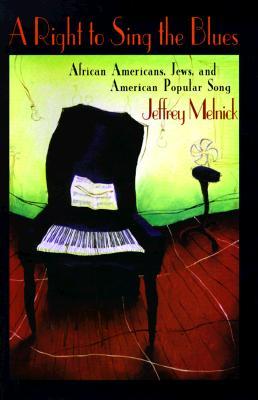
All too often an incident or accident, such as the eruption in Crown Heights with its legacy of bitterness and recrimination, thrusts Black-Jewish relations into the news. A volley of discussion follows, but little in the way of progress or enlightenment results -- and this is how things will remain until we radically revise the way we think about the complex interactions between African Americans and Jews. A Right to Sing the Blues offers just such a revision.
"Black-Jewish relations." Jeffrey Melnick argues, has mostly been a way for American Jews to talk about their ambivalent racial status, a narrative collectively constructed at critical moments when particular conflicts demand an explanation. Remarkably flexible, this narrative can organize diffuse materials into a coherent story that has a powerful hold on our imagination. Melnick elaborate this idea through an in-depth look at Jewish songwriters, composers, and performers who made "Black" music in the first few decades of this century. He shows how Jews such as George Gershwin Irving Berlin, Al Jolson. and others were able to portray their "natural" affinity for producing "Black music as a product of their Jewishness while simultaneously depicting Jewishness as a stable white identity. Melnick also contends that this cultural activity competed directly with Harlem Renaissance attempts to define Blackness.
Moving beyond the narrow focus of advocacy group politics, this book complicates and enriches our understanding of the cultural terrain shared by African Americans and Jews.
Expand description
Product notice
Returnable at the third party seller's discretion and may come without consumable supplements like access codes, CD's, or workbooks.
Very good, clean, tight copy. Text free of marks. Professional book dealer since 1999. All orders are processed promptly and carefully packaged with tracking.